


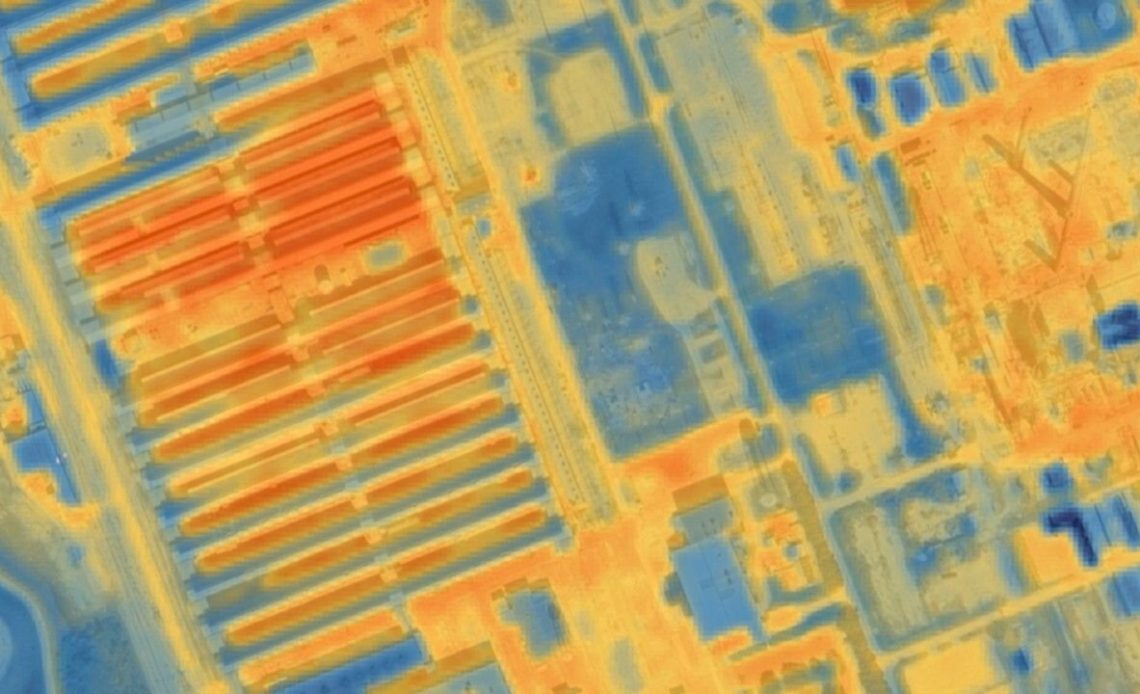
One of the world’s largest Bitcoin mining facilities is seen leaking heat into the environment in a new image captured from orbit by a heat-seeking satellite that was recently released by the U.K.-based company SatVu.
The image reveals the thermal footprint of a major Bitcoin-mining data center in Rockdale, Texas, which has been widely criticized for its electricity consumption and carbon footprint.
SatVu didn’t disclose which specific facility is in the image, but Rockdale is home to the Riot Platforms Bitcoin mine. The facility, considered the largest in the U.S., has an energy consumption of 700 megawatts, requiring about as much electricity as 300,000 homes.
The satellite image reveals in a resolution of 11.5 feet (3.5 meters) where and how much heat leaks into the environment from the plant. SatVu thinks that the insights that could be gleaned from such images could help regulators and grid operators better understand the impact such facilities have on the environment and local power networks.
“Today’s data center buildout is moving incredibly quickly, and the world needs better ways to understand what’s actually happening on the ground,” Thomas Cobti, SatVu’s VP for Business Development, said in a statement. “Thermal data gives an objective view of operational activity as it occurs — not weeks later through reports or announcements.”
Although the image was only released on Dec. 17, it was most likely captured already in 2023, before SatVu’s HotSat-1 satellites failed in orbit in December that year. SatVu plans to launch its replacement HotSat-2 next year and is already building HotSat-3.
The thermal camera aboard these satellites is the best in class, providing an order of a magnitude better resolution than other temperature-measuring devices in orbit.
SatVu released the first HotSat-1 images in October 2023, capturing the heat trails behind locomotives and showing how heat spreads from large sun-drenched concrete parking lots in a city like Las Vegas.
With the newly released image, the company shows how satellites could keep an objective eye on a fast-growing and controversial sector.
“At a closer level, [the image] reveals which substations and cooling systems are under load — clear, physical indicators of real operational behavior,” the company said in the statement. “Together, these layers provide a grounded, evidence-based view of how major data center sites are evolving in real time.”
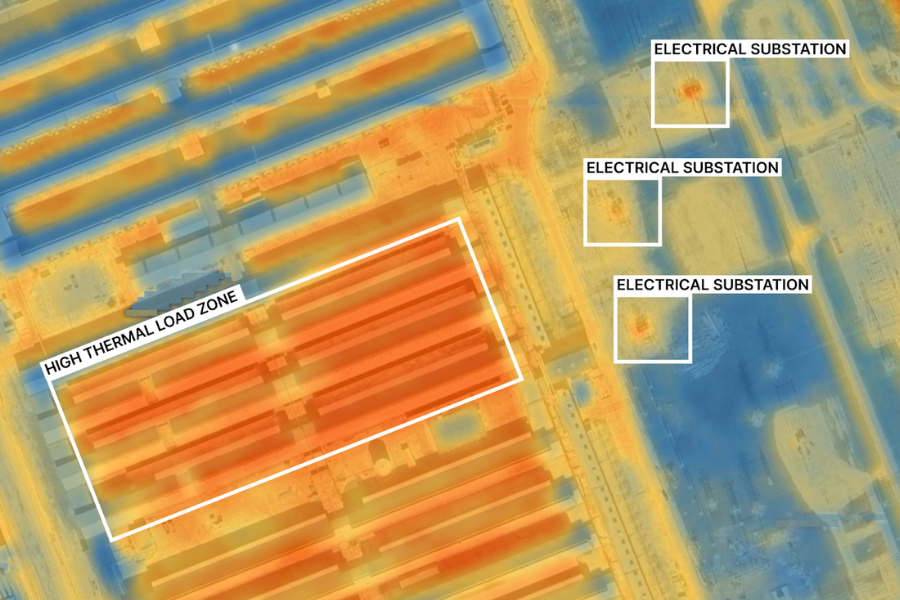
A closer inspection of the image shows “distinct thermal signatures across rooftop chillers, transformers and electrical yards, making clear which parts of the facility are active and which remain dormant,” SatVu added.
According to the McKinsey consultancy, investment into computing data centers will continue to grow, reaching more than $7 billion by 2030. Global data centers are believed to contribute by about 0.5% to the global carbon dioxide emissions. Bitcoin mining is especially energy intensive, a recent study estimated that one Bitcoin transaction generates about as much carbon dioxide as a gasoline car generates in a 1,600-mile (2,500-kilometer) drive.
Author: Tereza Pultarova
Source: Space.com
Reviewed By: Editorial Team
