

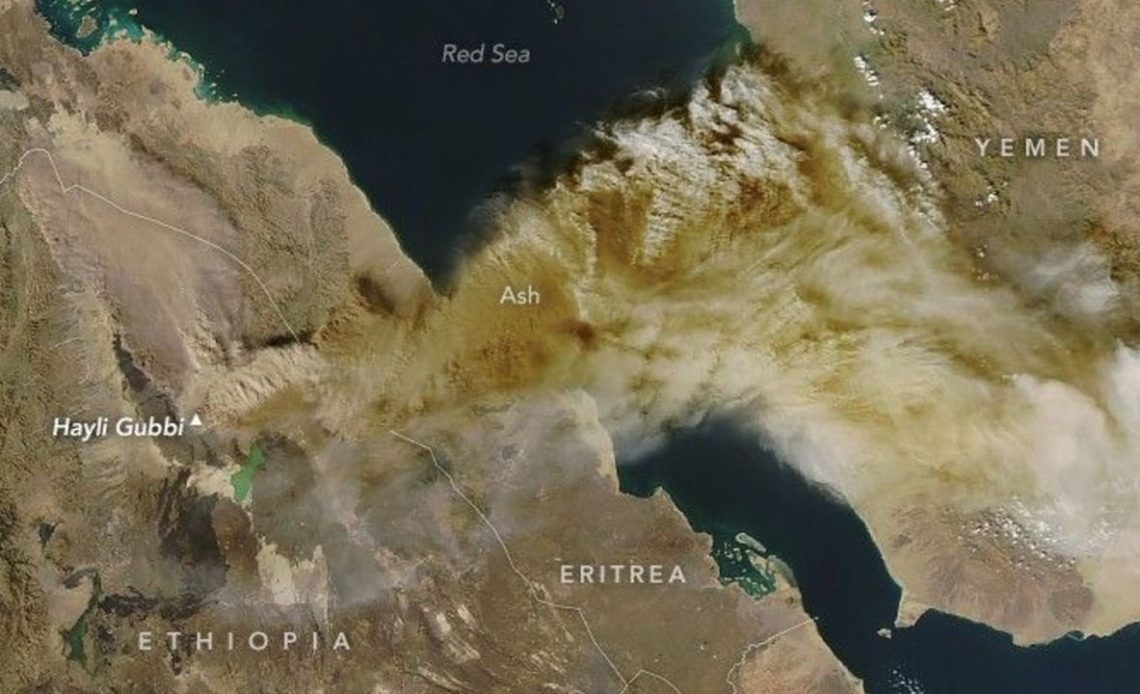
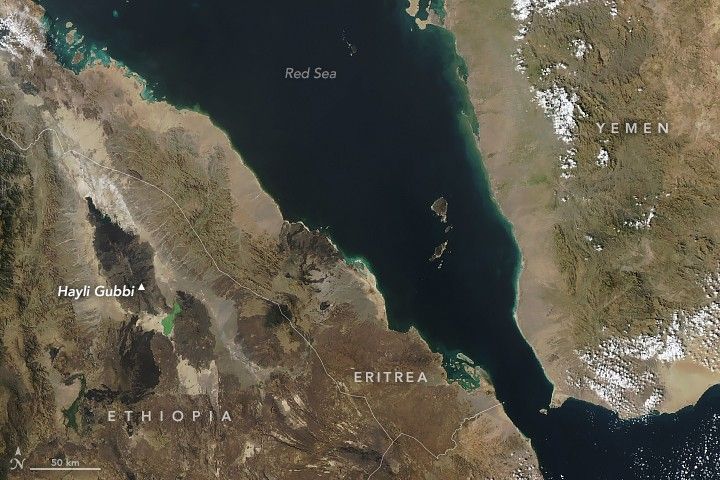
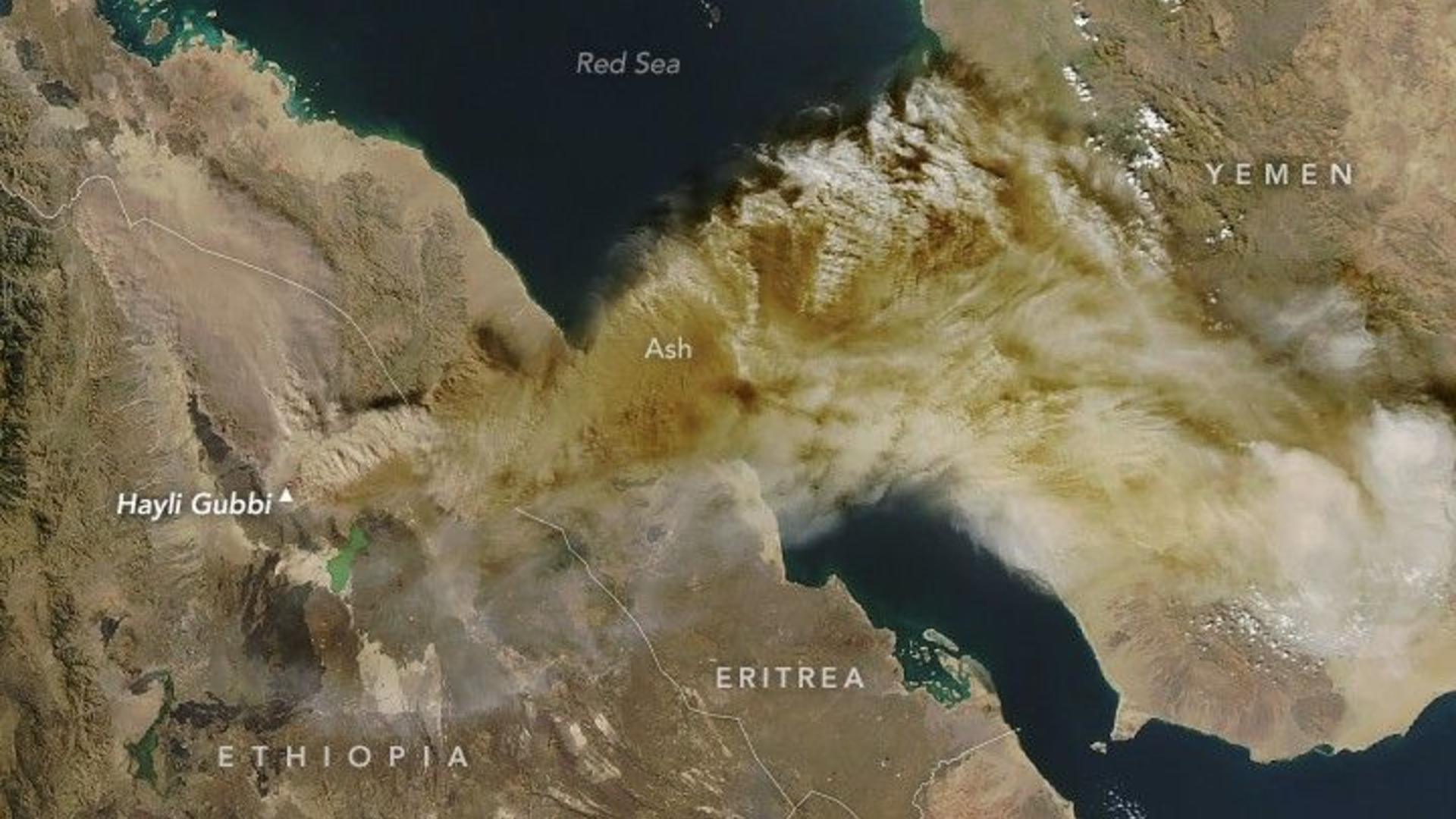
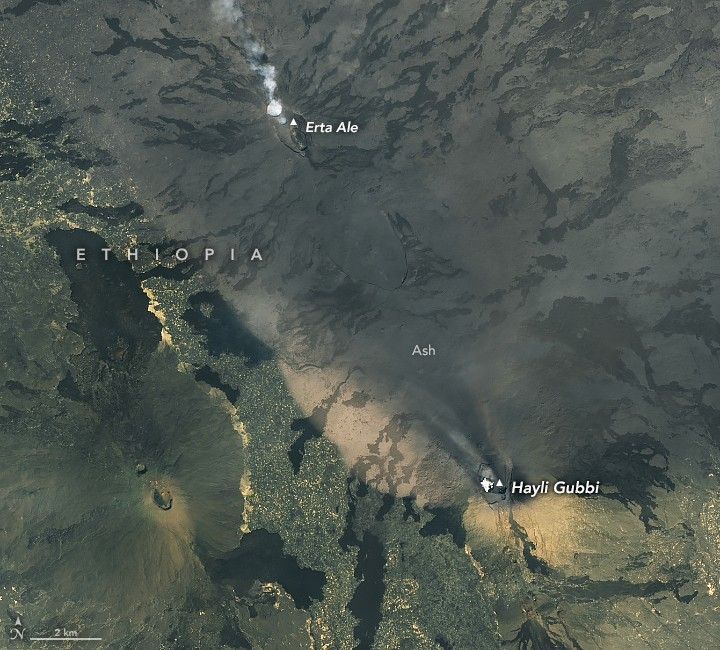
In late November, Hayli Gubbi erupted explosively, sending a towering plume of ash and volcanic gases high into the atmosphere. The MODIS instrument on NASA’s Aqua satellite captured the dramatic scene just four hours after the eruption began. The plume reached roughly 9 miles (15 kilometers) above sea level, drifting northeast across multiple countries and eventually disrupting flights as far away as India.
What is it?
Northern Ethiopia’s Danakil (Afar) Depression, near where the Hayli Gubbi volcano is located, is considered one of the most volcanically active and geologically dynamic places on Earth. Here, the African and Arabian tectonic plates are slowly pulling apart, thinning Earth’s crust and allowing magma to rise close to the surface. The region hosts a chain of shield volcanoes, broad mountains built by fluid magma, which includes Hayli Gubbi.
Because of its remoteness, volcanic activity in the Danakil region often goes undocumented. Estimates suggest its last major activity could have occurred thousands of years ago — or perhaps only centuries, a sign of how little this environment has been studied directly.
Where is it?
This image was taken in low Earth orbit above the Danakil region of Ethiopia.
Why is it amazing?
Because of its understudied status, Hayli Gubbi has no recorded eruptive history in the modern era. NASA’s new satellite imagery now provides the first observational record of its activity, establishing a baseline for future monitoring and scientific analysis. Given the tectonic activity of the area, scientists can use Earth-observing satellites like Aqua to further study how plate tectonics affects Earth’s volcanic activity, providing insights about these hard-to-reach areas.
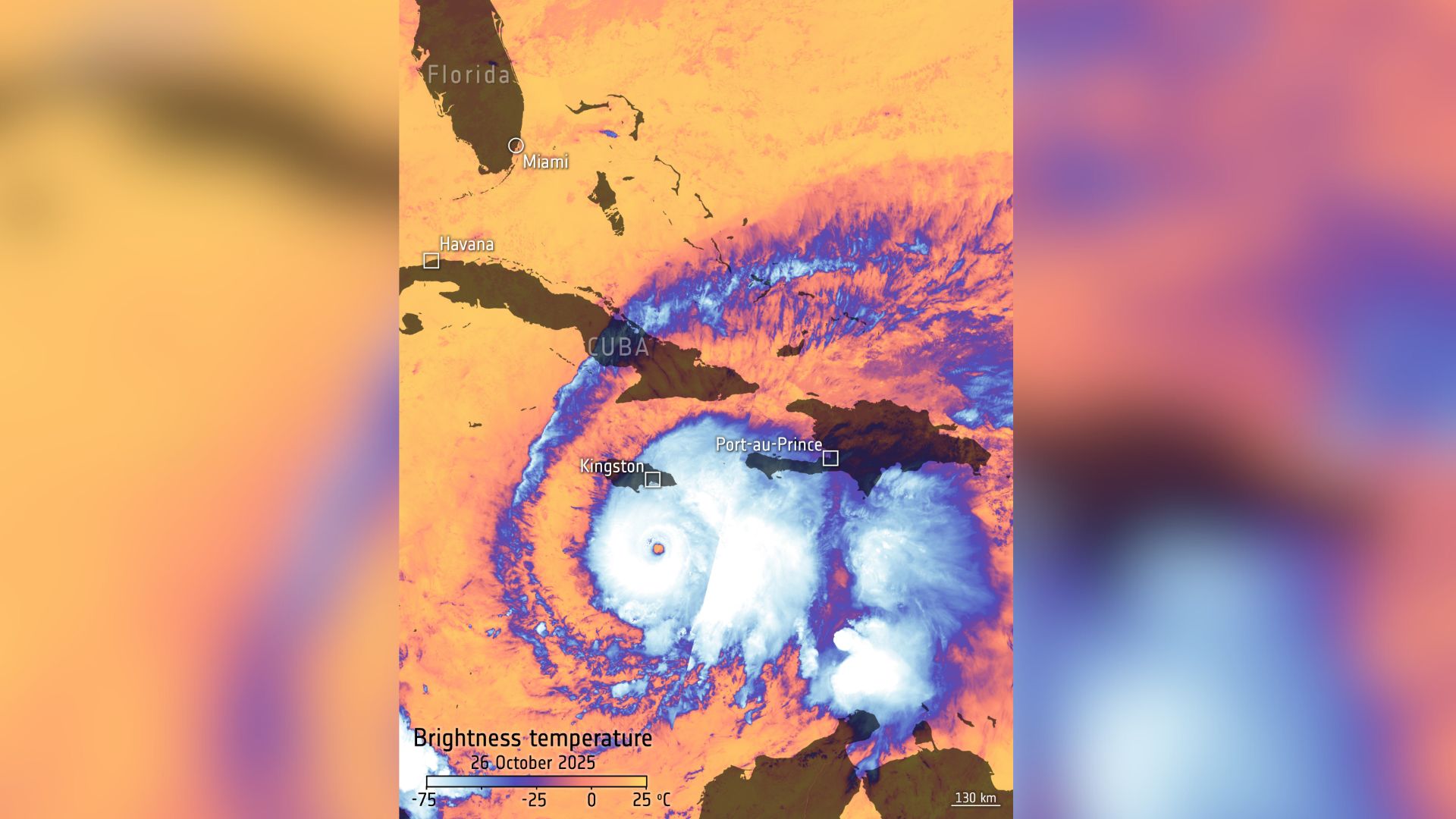
The image shows the difference in temperature between the top of a hurricane and the bottom.
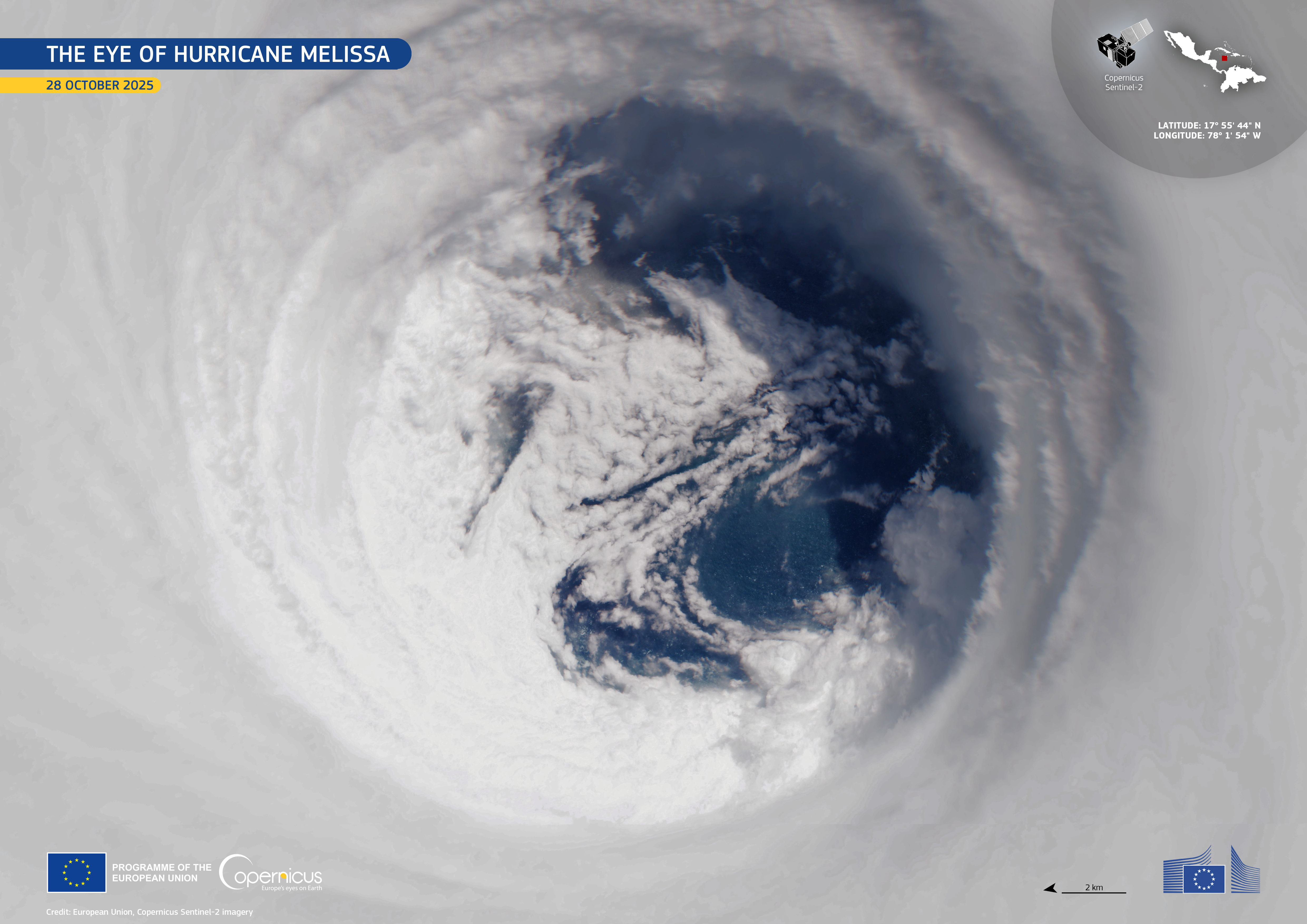
The images reveal the storm’s incredible power and offer vital insights into how such hurricanes form.
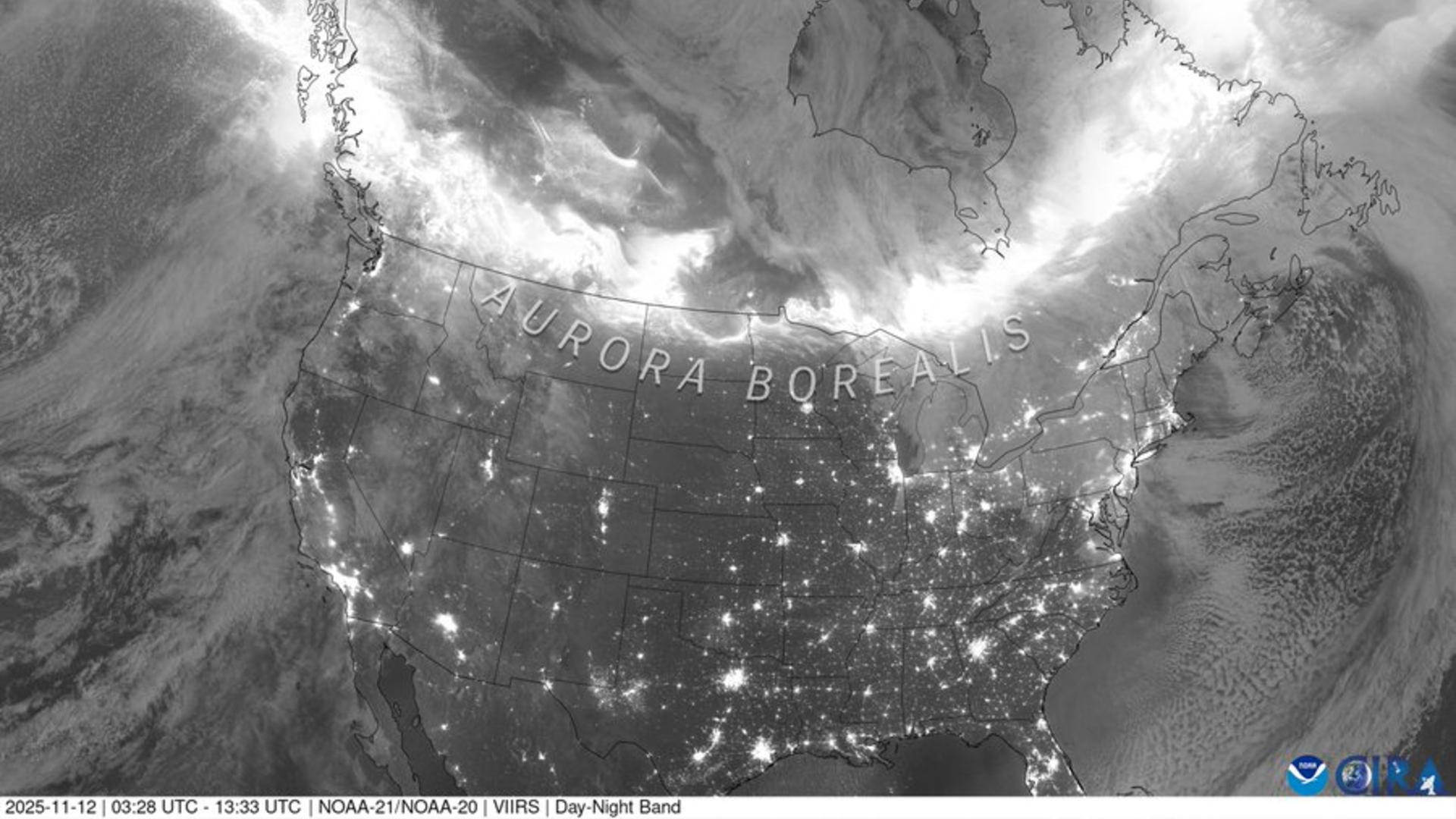
A powerful geomagnetic storm created a series of brilliant auroras recently for observers across North America.
Want to learn more?
You can learn more about satellites and volcanoes.
Author: Kenna Hughes-Castleberry
Source: Space.com
Reviewed By: Editorial Team