

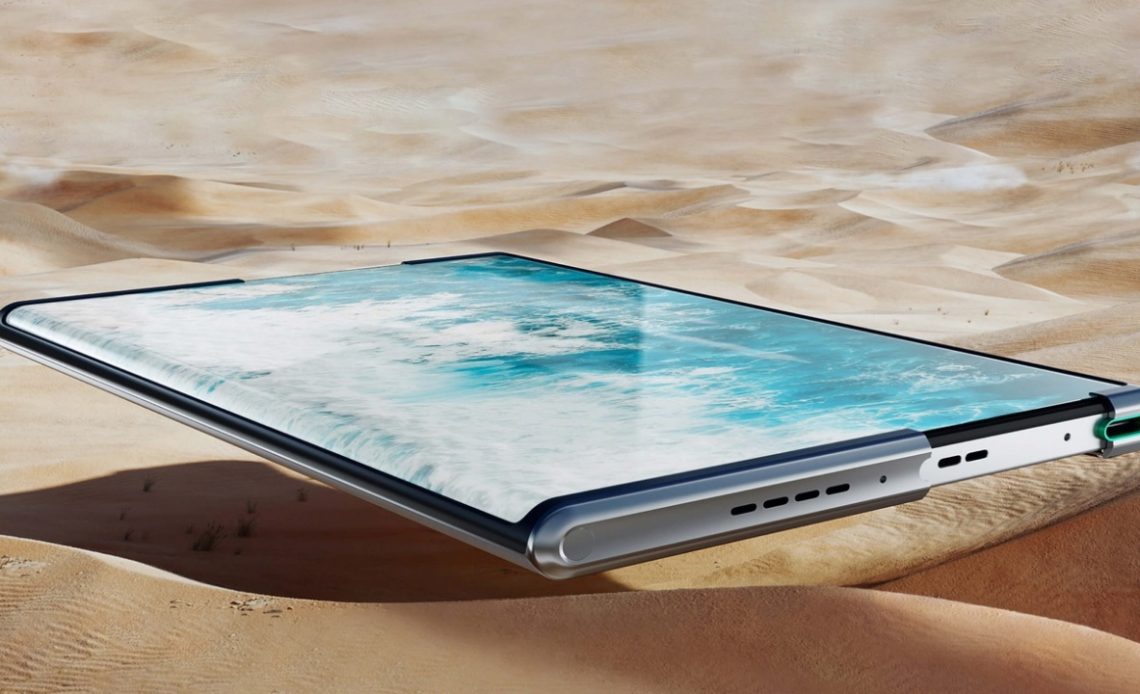
For a short period, the smartphone industry felt genuinely adventurous. It wasn’t just about better cameras or faster processors – companies were rethinking what a phone could physically become. Among those experiments, rollable phones stood out as one of the most promising ideas which not only looked appealing but also served a much more practical use case.
Instead of folding in half, these devices could expand their screens by unrolling part of the display from inside the body. One moment you had a normal-sized smartphone, and the next, with a smooth mechanical motion, it turned into something closer to a small tablet. It felt futuristic, but also surprisingly practical.
And then, almost as quickly as they appeared, rollable phones disappeared from the conversation.
This Wasn’t Just a Concept on Paper
Several companies had already built working prototypes that showed how real this idea was.
- LG Rollable was positioned as an actual upcoming product before LG exited the smartphone business. Its display expanded horizontally, giving users more room for videos, reading, and multitasking. Back in April 2021, the company confirmed that the device won’t be developed.
- Oppo X 2021 impressed many with how refined the mechanism looked. The screen extended smoothly, and the software adapted to the changing size. The company still has a dedicated page up on their website explaining all the technologies that went underneath developing the device but unfortunately, it didn’t go past the concept stage.
- Motorola Rizr Rollable explored a different approach, where the screen extended vertically, making the phone taller rather than wider. Again, the device showed potential when it was showcased back in 2023 which is relatively sooner than the rest of the concepts but we haven’t heard from the brand regarding that device since.
These devices weren’t rough tech demos. They showcased serious engineering – flexible OLED panels, internal rails, compact motors, and carefully designed sliding structures, all packed into something that still resembled a normal phone.
Why Rollable Phones Felt Like a Smarter Direction
Foldable phones deserve credit for pushing design forward, but they also brought visible compromises. Creases, failing displays, durability, and complex hinge systems are still part of the experience.
Rollables approached the “bigger screen” problem in a more subtle way.
- No obvious crease: Because the display bends gradually around an internal curve instead of folding sharply, the surface appears flatter and more uniform.
- One main display: Unlike many foldables that switch between outer and inner screens, rollables rely on a single display that simply changes size. That’s cleaner from both a hardware and software perspective. Moreover, it removes the hindrance of folding and unfolding your device everytime you want to use the bigger screen which is a major downside for flip phones.
- A normal phone most of the time: You wouldn’t always need the larger screen. But for watching videos, reading documents, or gaming, you could expand it instantly. It felt situational rather than forced.
- Better everyday feel: Foldables are often thicker than standard phones but devices like the Galaxy Z Fold 7 solve that to a larger extent. However, the unconventional aspect ratios in some foldable phones do prove to be a con as apps often don’t adapt to these with black bars showing up around the app’s screen. Rollables, at least in concept, stayed closer to familiar dimensions, which matters in daily use.
In many ways, rollables seemed less like a compromise and more like a natural evolution of the smartphone.
Also Read: Samsung Galaxy Z TriFold Launched in Korea with a 10-inch Foldable Display
Why Didn’t Rollable Phones Take Off?
The idea was strong, but the obstacles were just as serious.
- Engineering challenges: A rollable device depends on moving parts: motors, sliding frames, and layered flexible materials. Ensuring long-term durability – against dust, drops, and thousands of expansions – is extremely demanding.
- High costs: Flexible displays are already expensive. Adding precision mechanical systems pushes costs even higher, making mass-market pricing difficult.
- Market caution: At the time, even foldables were a risky bet. Investing heavily in an even newer form factor was a big leap for manufacturers, especially as overall smartphone growth slowed.
Industry changes
LG’s exit from the smartphone market removed one of the boldest players in this space, which significantly slowed momentum behind rollables. Moreover, because the foldable phones’ space gained better momentum, brands rushed towards exploring the form factor in deeper depths and pushing it to its boundaries so they could perfect it.
As a result, the focus was shifted to safer upgrades: camera systems, performance gains, and now AI features. Ambitious hardware experiments became less common.
Why the Concept Still Feels Relevant
Today’s phones are powerful, but the basic slab design has barely changed in years. Screens are larger, yet still limited for serious productivity. Tablets are great, but not pocket-friendly. Foldables sit somewhere in between, but remain expensive and niche.
A set of mature rollable phones could solve these issues:
- Offering a tablet-like view for media and reading
- Giving gamers more screen space without a separate device
- Allowing apps to adapt dynamically as the screen grows
- Bringing back a sense of physical innovation, not just software features
Rollables represented visible progress – something users could see, feel, and interact with. That kind of innovation leaves a stronger impression than incremental spec upgrades.
Not Gone Forever, Just Early
Rollable phones didn’t fail because the idea lacked value. They paused because the technology, cost structure, and market timing weren’t fully aligned.
Display technology continues to improve. Mechanical components are becoming more compact and reliable. If foldables could evolve from fragile first attempts into mainstream products, there’s no reason rollables couldn’t follow a similar path.
When they return – and there’s a good chance they will – they may finally deliver what they promised from the start: a smartphone that adapts its size to you, instead of forcing you to adapt to it.
Author: Abhishek Malhotra
Source: The Mobile Indian
Reviewed By: Editorial Team