


When Pen Densham’s teenage daughter picked up one of his old cameras and started playing around, she inadvertently sparked a creative transformation in her father. The Oscar-nominated filmmaker – whose credits include Robin Hood: Prince of Thieves, Backdraft and TV shows like The Outer Limits and The Twilight Zone – watched her ignore every conventional rule of photography. Then suddenly, he realized he’d forgotten something fundamental about making art.
“She wasn’t following rules, she was just exploring,” Densham reflects. “Watching her reminded me that art begins in freedom, not control.”
That moment catalyzed a radical departure from traditional nature and landscape photography. Since then, Densham has been working on what he calls “visual music”: impressionistic images that blur the boundaries between sharp documentation and emotional abstraction. These photographs don’t capture the natural world so much as translate them into feelings.
A cinematic eye
As you might expect, Densham’s background in film profoundly shapes his approach to photography. Where nature and landscape photographers typically prioritize sharpness, detail and the decisive moment, Densham deliberately introduces motion, soft focus and extended exposures. Trees appear to breathe. Water becomes brushstrokes. Reflections transform into portals to memory.
“Cameras were my father’s magic wands,” he explains, referencing his childhood in England’s New Forest, where he appeared in his father’s films from age four. “I grew up believing that light could be shaped into emotion. In filmmaking, that emotion was narrative. In photography, it’s pure experience.”
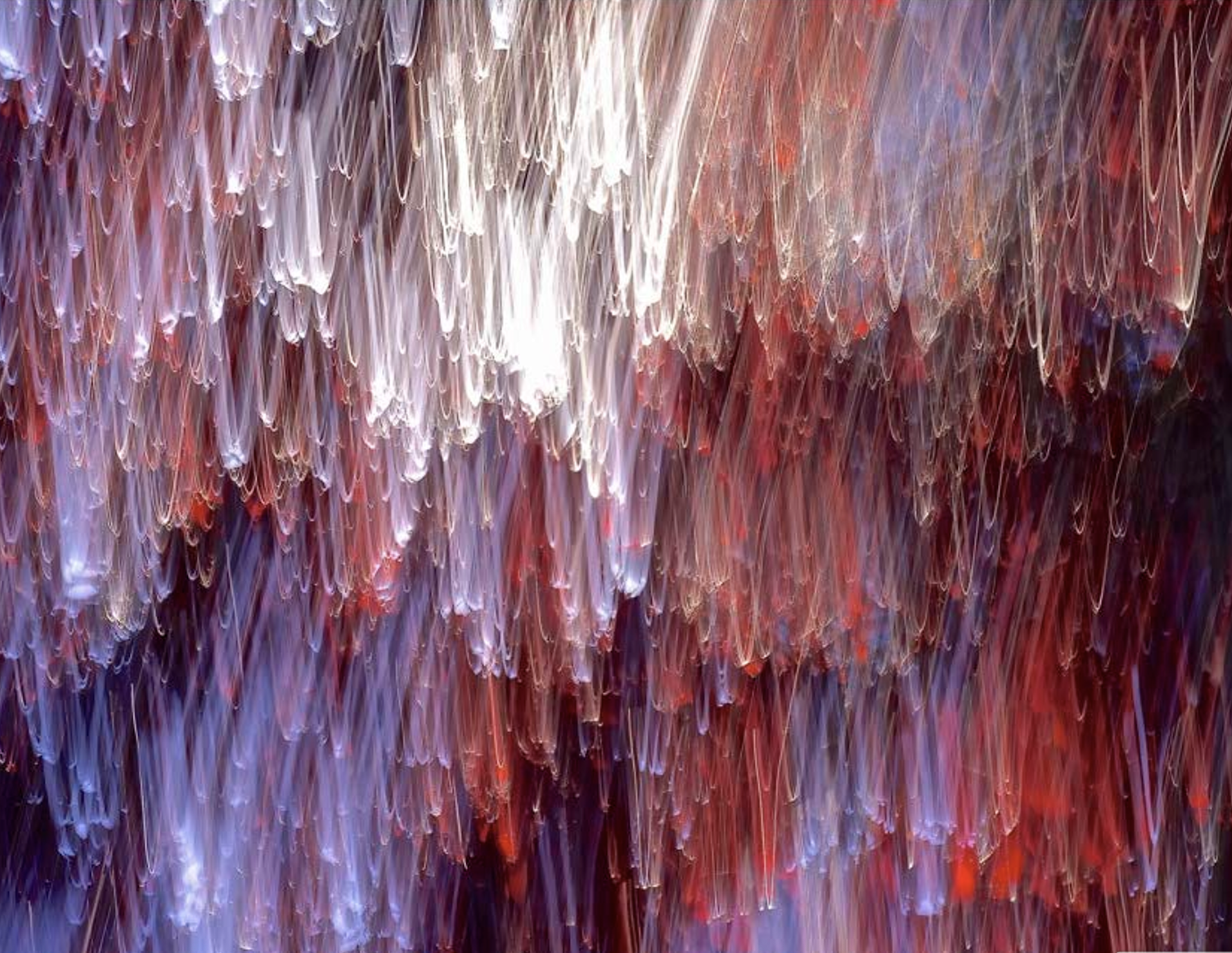
This shift from narrative to pure sensation represents a significant reimagining of what this kind of photography can achieve. Rather than documenting what nature looks like, Densham’s work explores what nature feels like.
While Densham hasn’t detailed his specific techniques, the impressionist quality of his work suggests deliberate use of long exposures, intentional camera movement and selective focus to create “shimmering, dreamlike compositions”. The resulting images (swirling koi ponds, rippling water reflections, autumn forests rendered almost abstract) prioritize atmosphere over accuracy.
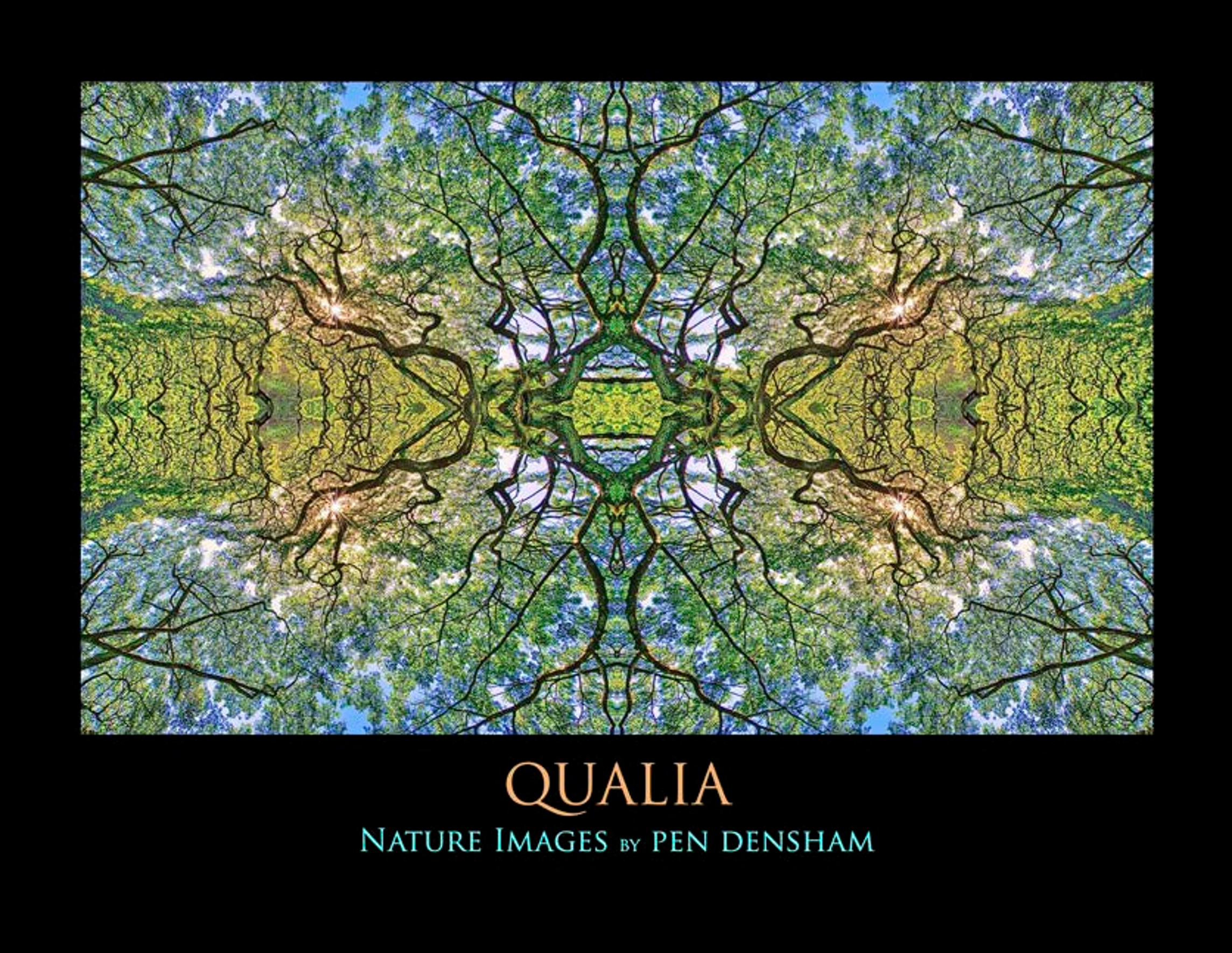
His series Organic Mandalas takes this approach further, creating kaleidoscopic representations of natural energy that border on spiritual art. These aren’t photographs in the conventional sense; they’re visual meditations constructed through the camera, rather than captured by it.
While his approach is radical, it’s clearly finding an audience. Densham’s images have appeared in Los Angeles galleries including Here Is Elsewhere, Loisir Gallery, and Posner Fine Art, with collectors from California to Monaco acquiring pieces. His book Qualia, named for a philosophical term describing sensory experiences that resist verbal description, gathers together his most striking work. Notably, Densham isn’t selling the volume commercially, instead offering it as a complimentary digital download.
Is this the future?
The timing, in one sense, could be better. Densham’s approach arrives at a point in history when camera technology increasingly prioritizes clinical sharpness and computational perfection.
Modern cameras can capture extraordinary detail, freeze impossible moments, and stack focus across impossible depth ranges. Against this backdrop, his deliberately soft, motion-blurred, emotionally-driven work could be seen as a gentle counter-movement; a reminder that technical perfection and artistic impact aren’t synonyms.
“Photography can be more than a window, it can be a mirror for emotion,” Densham argues. “When people look at these images, I want them to sense the world’s organic pulse, the same one that’s inside us all.”
For photographers accustomed to chasing sharpness and precision, Densham’s work poses an intriguing challenge: what happens when you stop trying to control the image and start trying to feel it instead?
Author: Tom May
Source: DigitalCameraWorld
Reviewed By: Editorial Team