

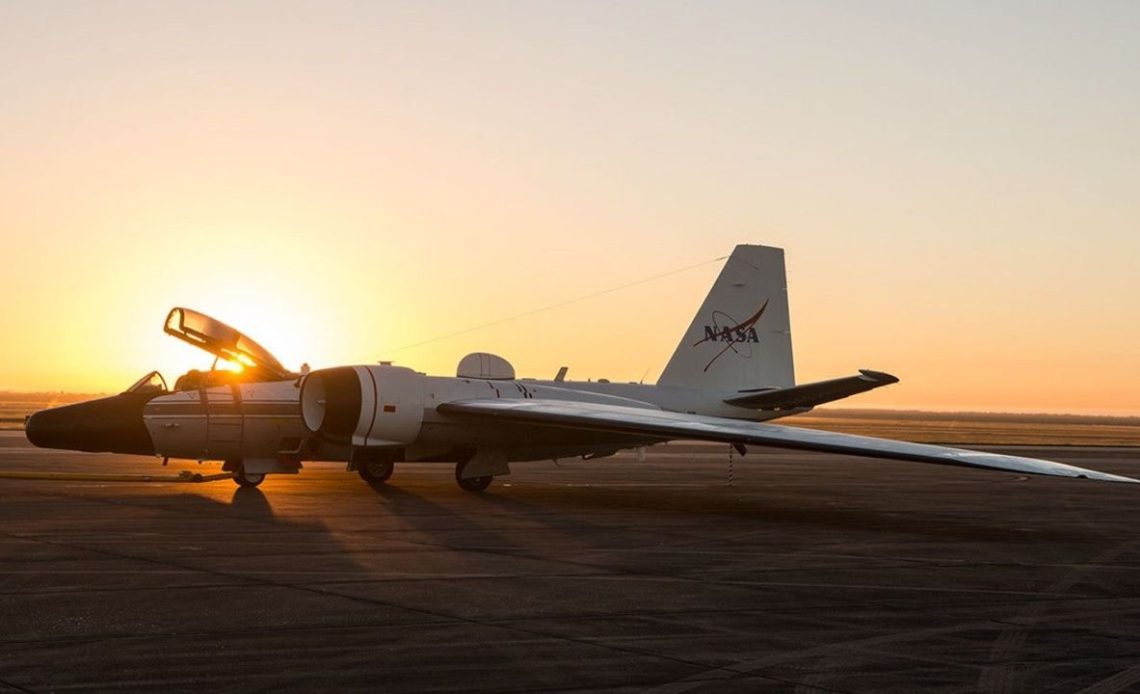
A NASA research aircraft crashed in a fiery landing accident, but luckily none of the crew aboard the jet were harmed.
One of NASA’s high-altitude WB-57 research jets skidded across the runway trailing fire and smoke behind it at Houston’s Ellington Field on Tuesday (Jan. 27) after landing with its wheels up due to a mechanical issue. Video posted to social media by Houston Air Watch shows the plane making a landing on its belly. It’s unclear what the mechanical issue may have been, but it appears to have affected the aircraft’s landing gear.
NASA confirmed that all crewmembers are safe, according to Houston news outlet KHOU 11. Footage shows first responders helping the crew out of the cockpit after the plane came to a rest.
NASA WB-57 involved in landing incident at Ellington Airport in #houston @KHOU pic.twitter.com/HOvr2YuHshJanuary 27, 2026
The agency is now looking into the mechanical issue that caused the hairy landing.
“Response to the incident is ongoing, and all crew are safe at this time,” NASA spokesperson Bethany Stevens posted on X on Tuesday. “As with any incident, a thorough investigation will be conducted by NASA into the cause. NASA will transparently update the public as we gather more information.”
NASA owns three WB-57 aircraft, variants of the Martin B-57 Canberra that was first built as a bomber and high-altitude spy plane for the United States Air Force in 1953. The B-57 saw extensive use throughout the Vietnam War doing reconnaissance runs. The aircraft was designed to fly at altitudes as high as 63,000 feet (19 kilometers) with a range of 2,500 miles (4,000 km).
According to a NASA fact sheet, two of the agency’s three WB-57s have been on hold for inspections; the one that crashed today is the only one to have flown recently. All three are based out of Ellington Field, located near the agency’s Johnson Space Center in Houston.
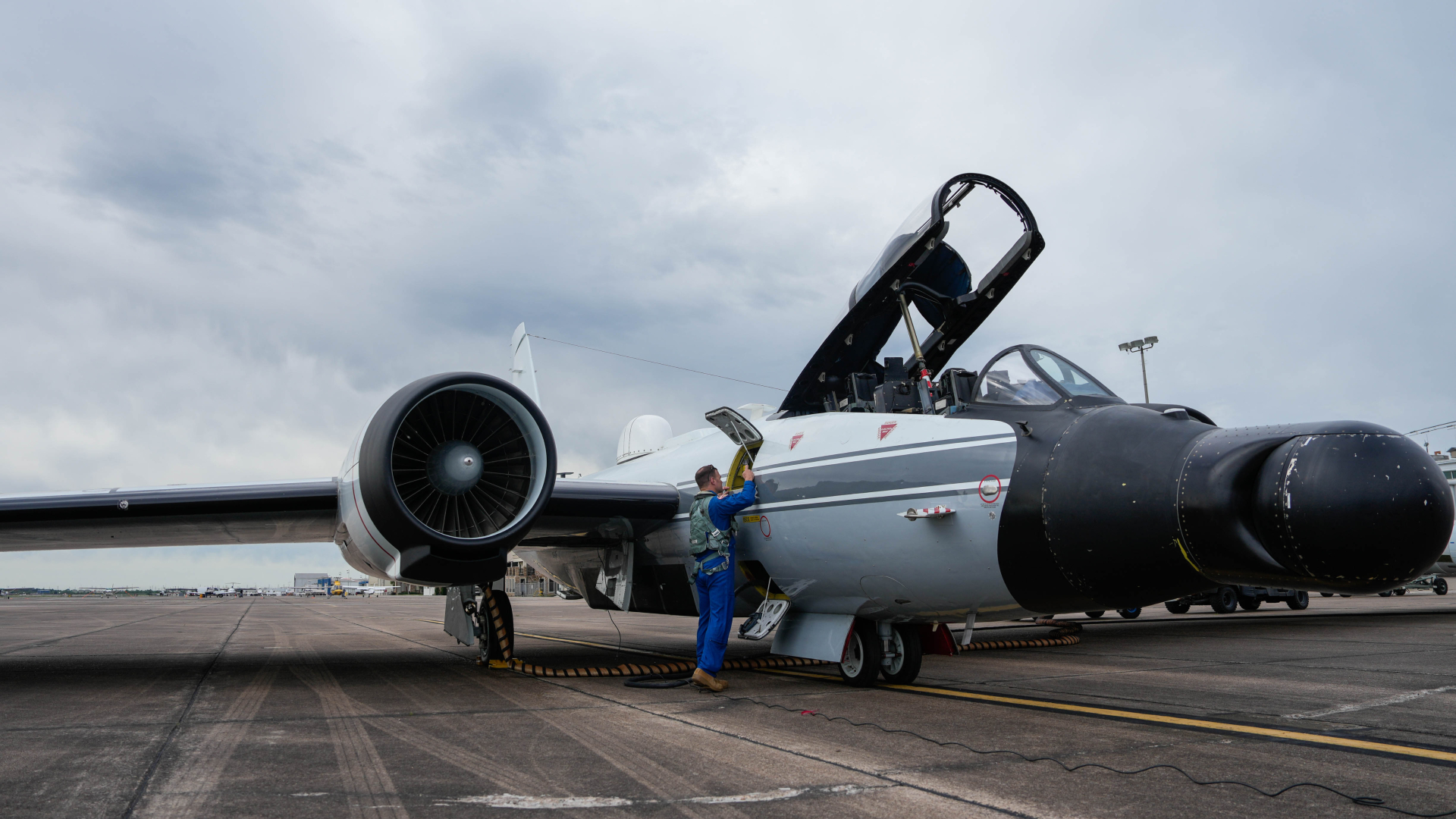
Because its platform was designed to be a bomber, the WB-57 is capable of carrying heavy payloads — up to 8,800 lbs. (4,000 kilograms), according to NASA. That gives the jet versatility for conducting scientific experiments, such as studying solar eclipses.
In April 2024, a NASA WB-57 flew into the path of the sun to study the corona, its outer atmosphere. By doing so, the jet was able to experience over six minutes of totality, 25% more than anyone on the ground got to see. The jet carried a high-resolution, high-speed camera that measured the sun’s corona in wavelengths ranging from infrared to visible light.
Author: Brett Tingley
Source: Space.com
Reviewed By: Editorial Team