

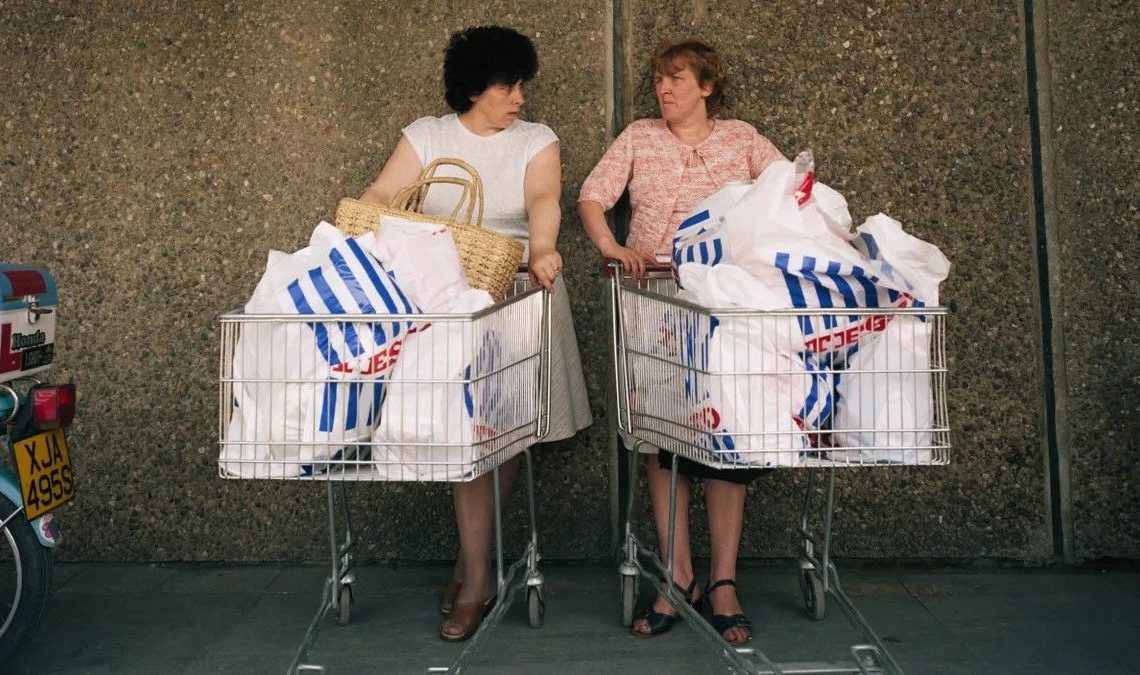
Martin Parr, one of Britain’s most acclaimed documentary photographers, died on December 06 aged 73 – just weeks before a major retrospective was due to open at the Jeu de Paume in Paris, France. The exhibition, Global Warning, running from January 30 to May 24, 2026, was planned in collaboration with Parr himself.
Its premise is both simple and devastating: for five decades, while documenting tourists and consumers with his characteristic saturated flash, Parr was actually capturing the causes of climate breakdown – even though nobody was explicitly framing it that way.
This isn’t, then, a photographer pivoting to environmental activism in his final years. It’s a recontextualisation of work that was always there, hiding in plain sight behind the humor and garish colors.
Accidental environmentalist
Running at the same time as The Last Resort exhibition in Bristol, England, the new Paris show brings together around 180 works spanning from the late 1970s to recent years.
It’s organized into five sections: beaches transformed by mass leisure, consumerism as religion, global tourism’s contradictions, humans’ relationship with animals, and technological addiction.
Recurring motifs emerge (waste, cars, fossil fuel consumption, overconsumption) that viewers might have noticed, but never considered as a coherent environmental record.
Working with Parr before his death, the thesis of curator Quentin Bajac was that every time the former photographed a littered beach, a traffic jam of tourists or someone photographing their food, he was actually documenting the climate catastrophe in progress.
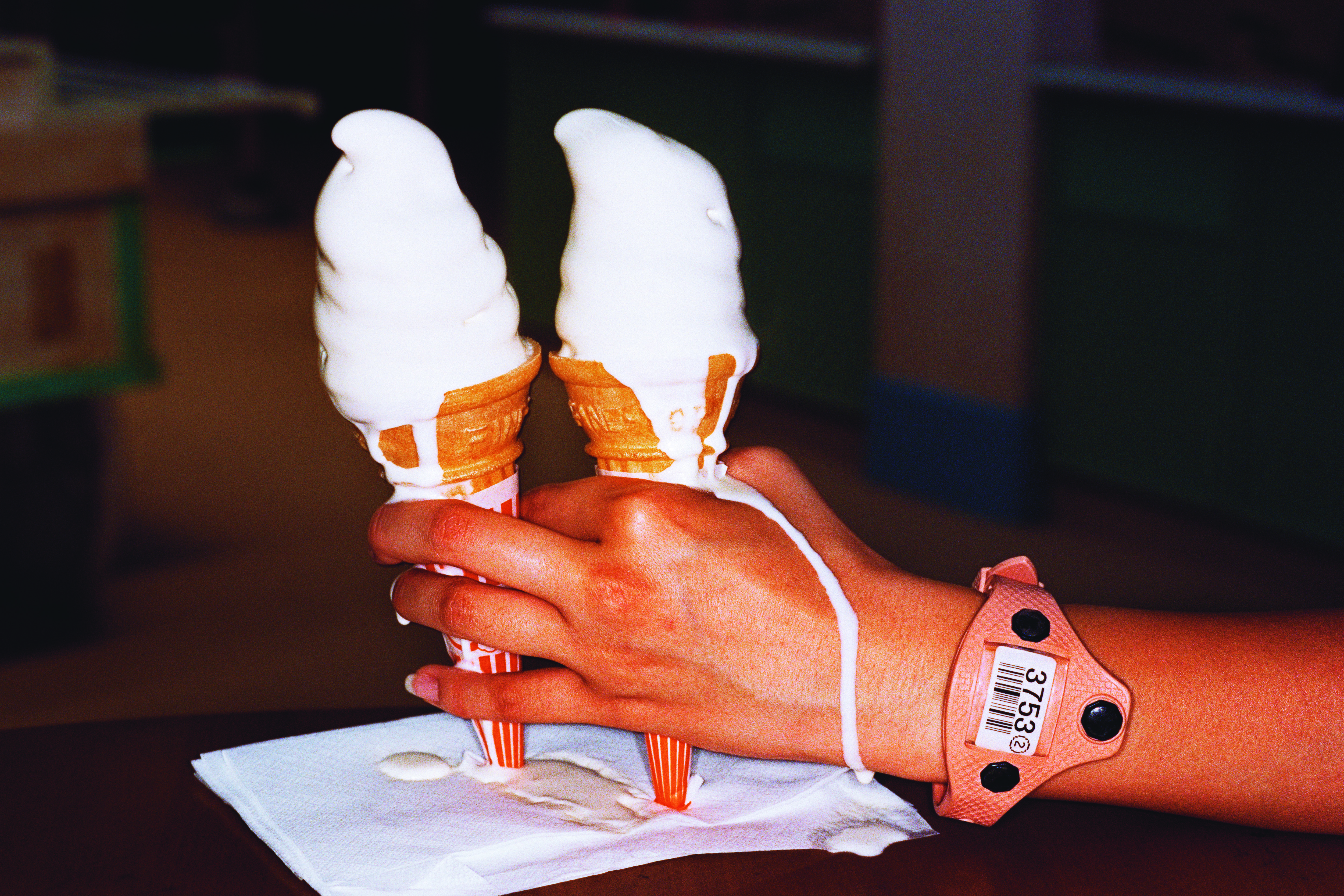
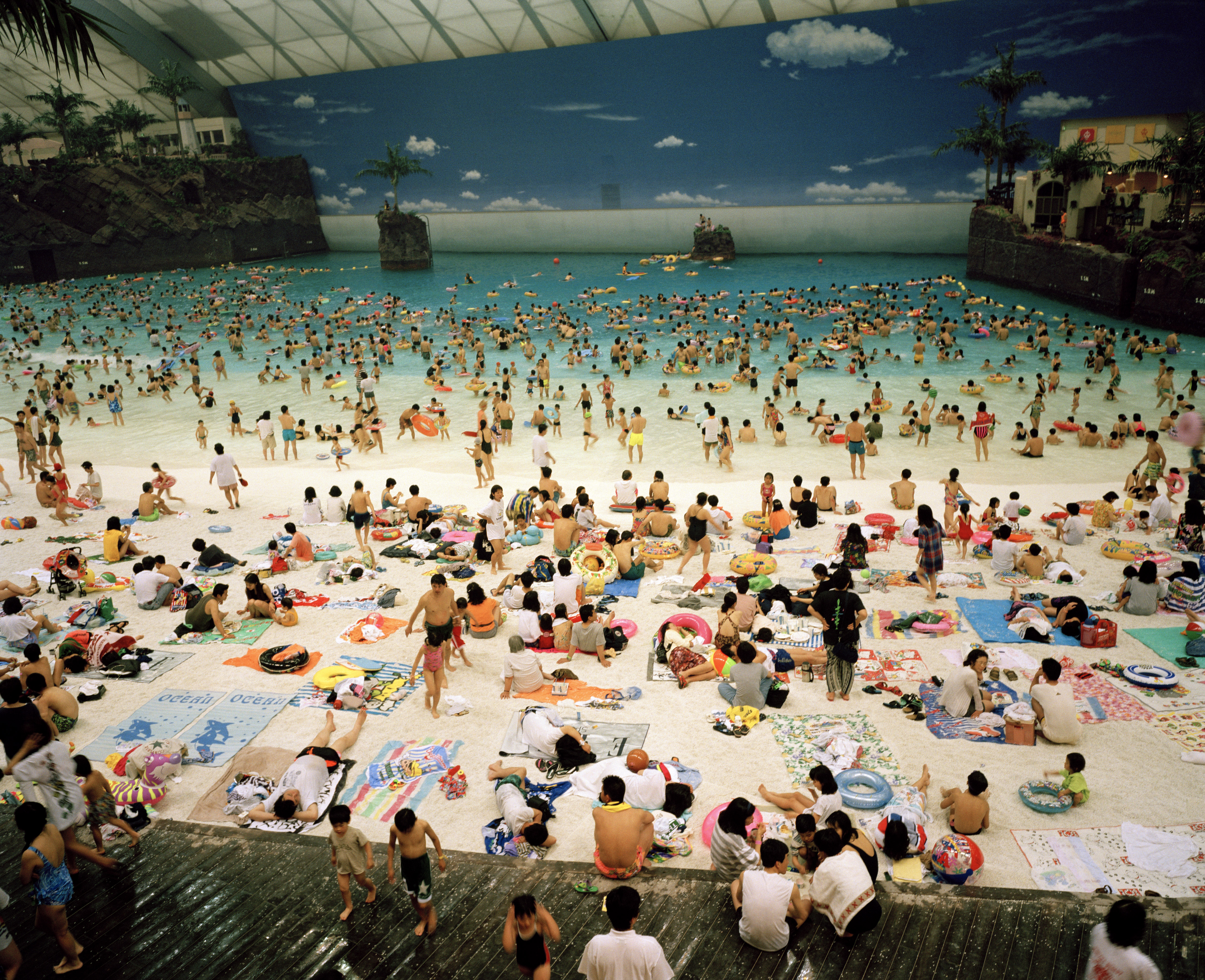
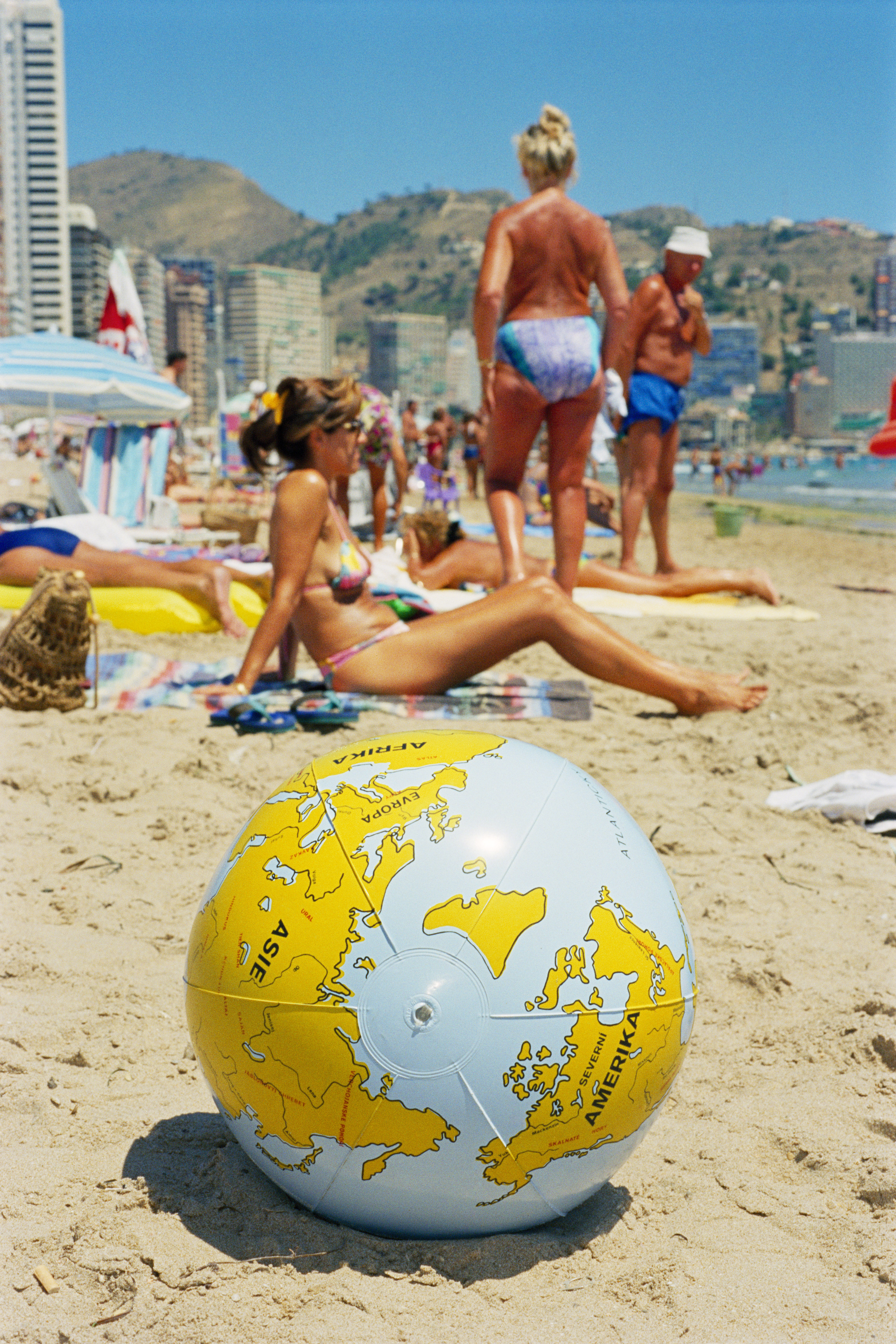
In other words, he wasn’t just documenting quirky tourist behaviour. He was creating a visual database of how mass mobility, enabled by cheap flights and fossil fuels, was reshaping both destinations and visitors. The work doubles as both social satire and carbon footprint visualization.
Importantly, none of this was ever lecturing or self-important. Parr never positioned himself as intellectually or environmentally superior to his subjects. In 2022, he acknowledged: “We’re heading for catastrophe, but we’re all heading there together.”
He freely admitted his own substantial carbon footprint and never adopted the preachy tone that makes so much environmental photography difficult to digest.
Changing times, changing meaning
This idea of reinterpreting photography decades on might seem strange or controversial, but it certainly does make you stop and think. A 1997 Parr image of a globe-shaped beach ball on sand in Benidorm was, at the time, a witty observation about packaged leisure. In 2026, we see our planet itself being treated as a disposable toy.
The photograph hasn’t changed; we have.
For photographers thinking about long-term projects, it’s all very instructive. Parr shot what interested him (the gap between aspiration and reality, the absurdities of modern life) and the work has proved durable enough to support multiple interpretations as society’s concerns evolved.
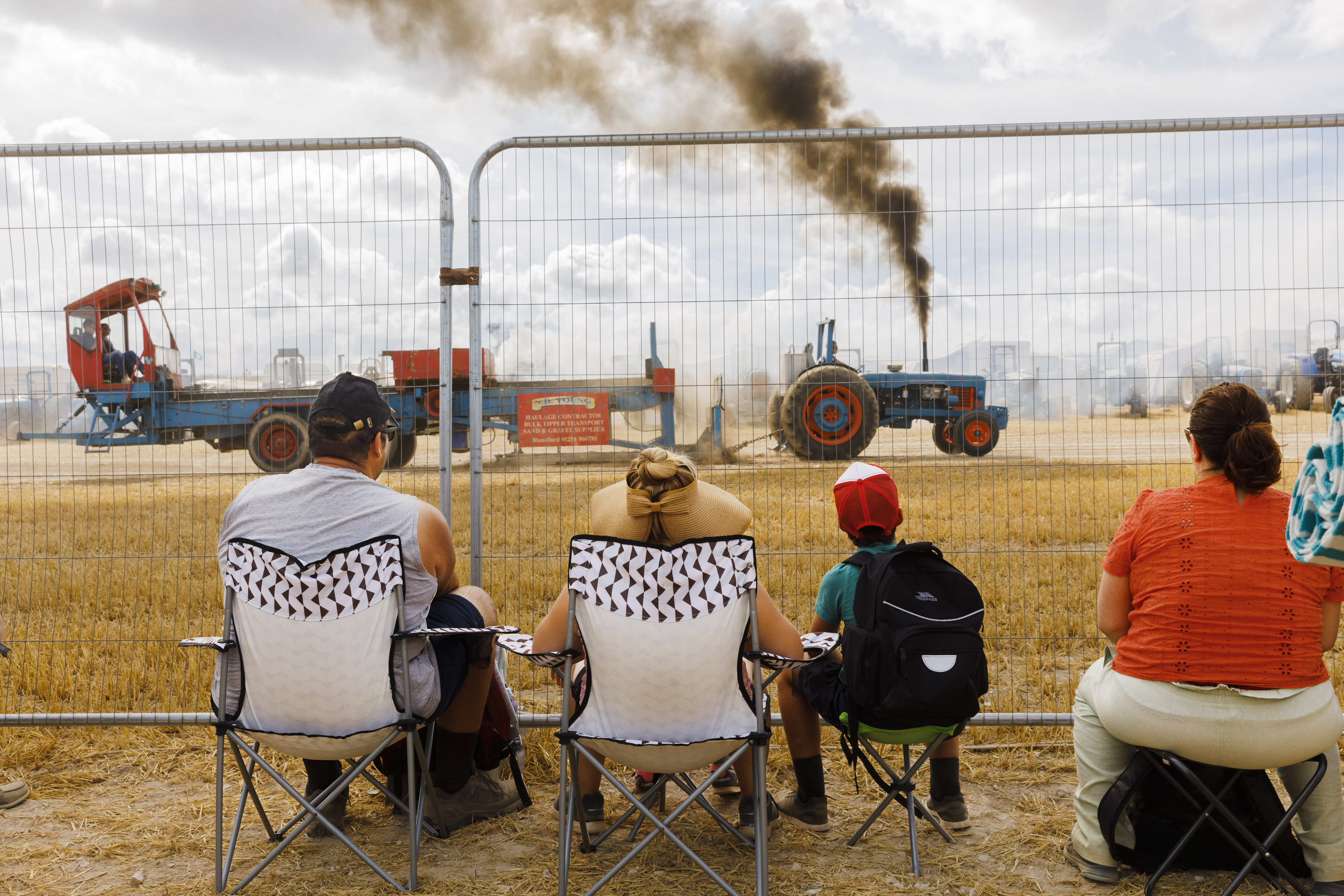
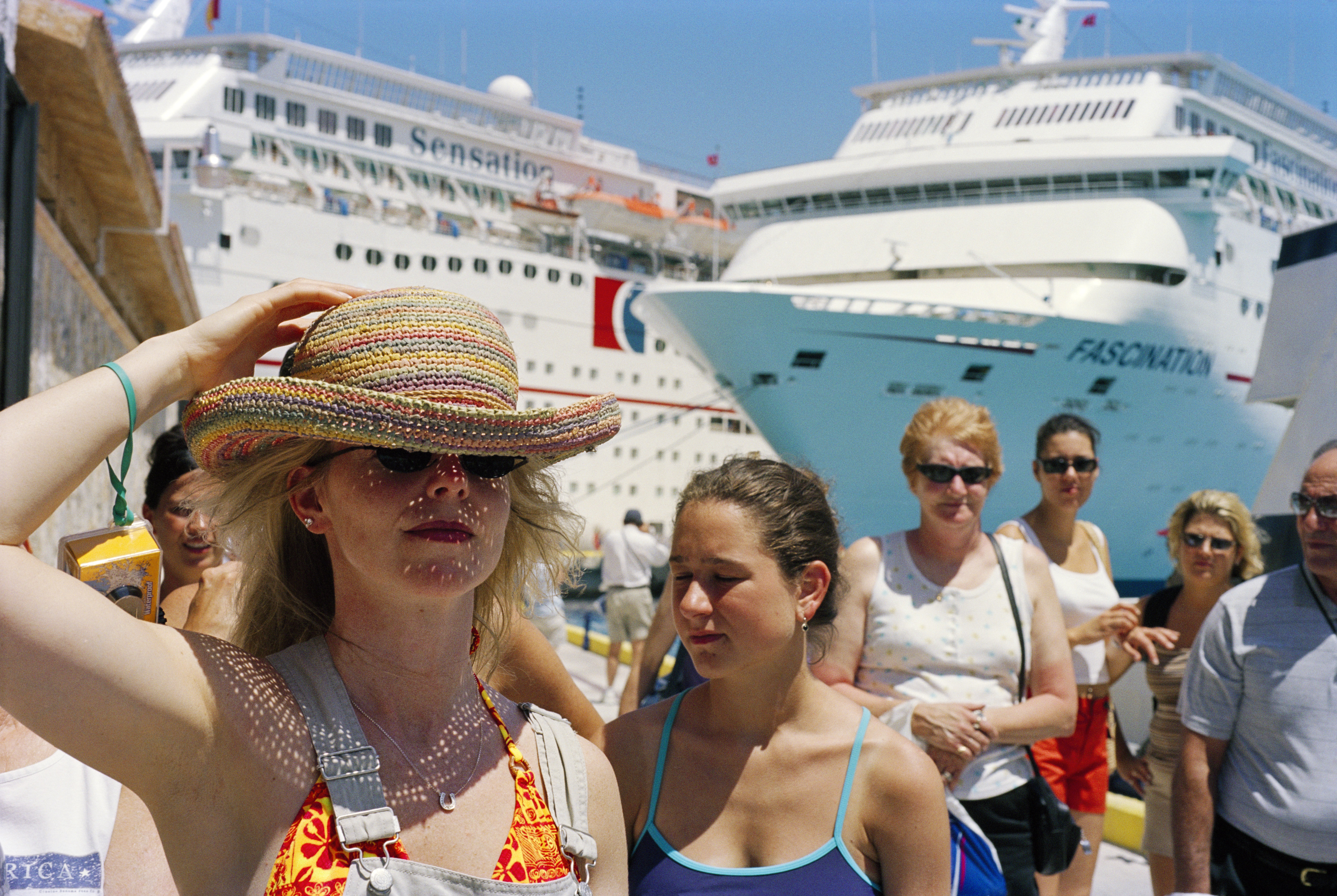
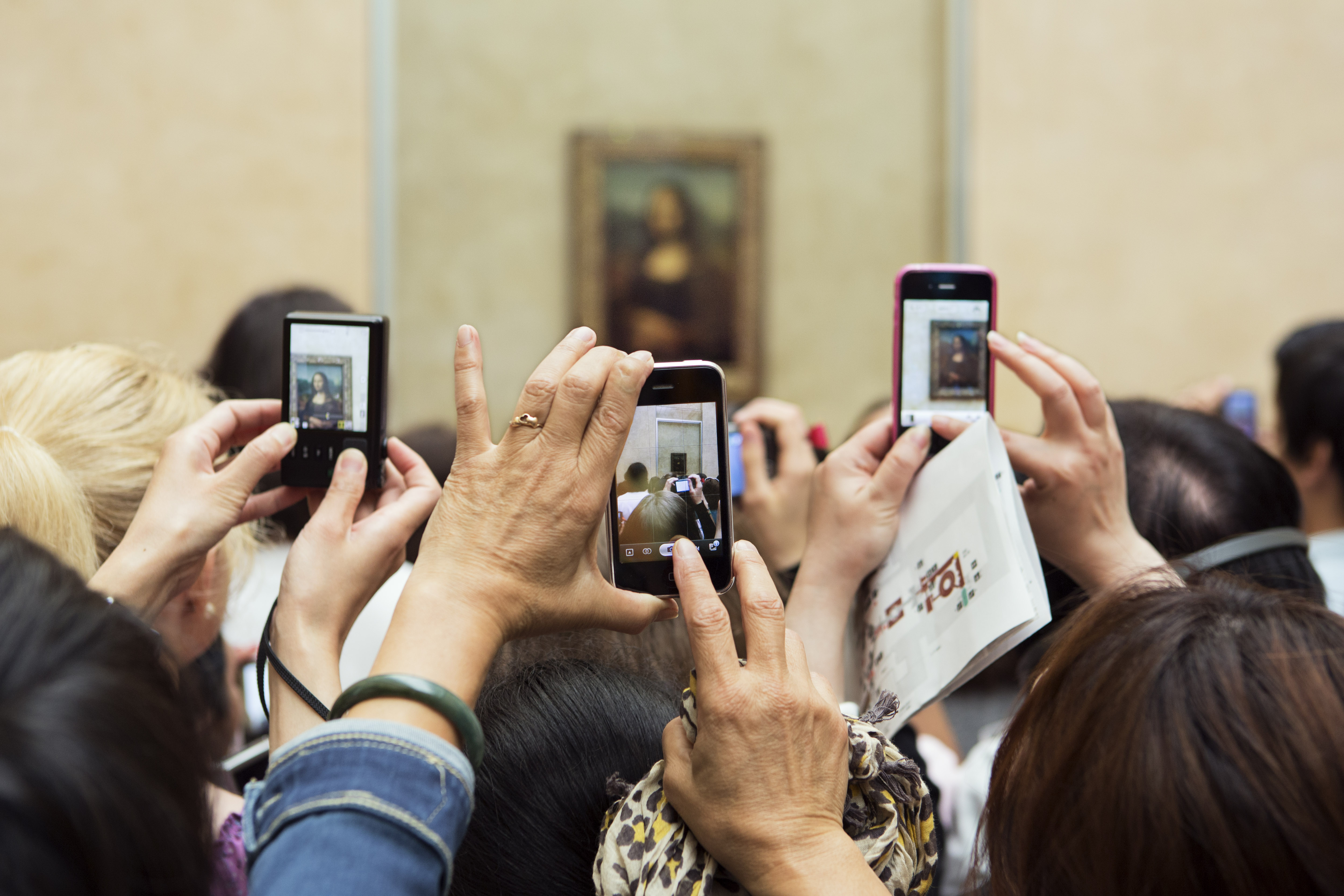
That close-up of sticky fingers holding ice cream isn’t just about food; it’s about immediate gratification and disposability. Tourists photographing the Mona Lisa on phones isn’t just about technology it’s about experience mediated and commodified. The packed indoor beach in Japan isn’t just surreal; it’s about artificial environments replacing natural ones.
What photographers can take from this
The exhibition arrives when photography is expected to be “addressing” climate change. But that needn’t necessarily mean defaulting to melting glaciers and polar bears. Parr’s approach suggests that shooting people with shopping trolleys might ultimately prove more effective documentation of the problem.
His 2021 statement applies perfectly to this exhibition’s thesis: “I create entertainment that contains a serious message if you want to read it, but I’m not trying to convince anyone – I simply show what people already think they know.”
Global Warning proves he was showing us what we didn’t know we knew: that we were documenting our own environmental collapse, one holiday snap at a time. And he did it with a flash, a macro lens and a willingness to look closely at what everyone else preferred to ignore.
Martin Parr: Global Warning runs at Jeu de Paume, Paris, France, from January 30 to May 24. Entry €14 ($16 / £12 / AU$24) or €7.50 ($8.75 / £6.50 / AU$13) for under-25s during the week.
Author: Tom May
Source: DigitalCameraWorld
Reviewed By: Editorial Team