

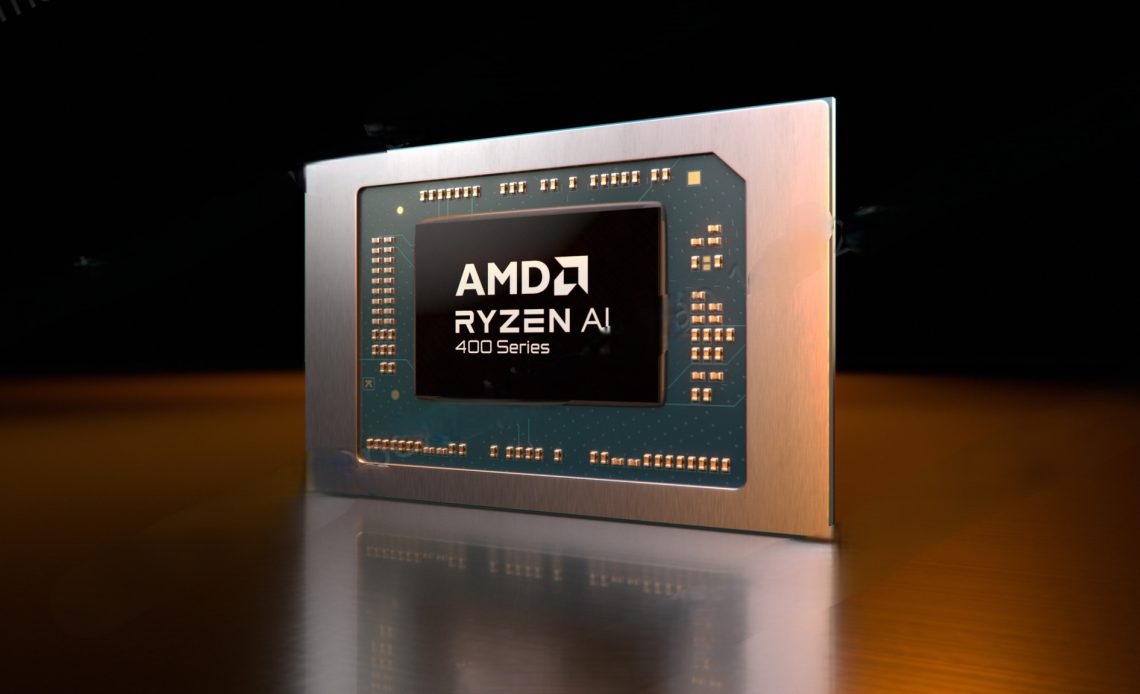
AMD’s push into socketed desktop PCs that use the Ryzen AI 400 may yield an extraordinary bonus: the ability to buy a mobile Ryzen processor at a retailer like Newegg, install it, then upgrade that mobile processor into a desktop PC that uses it.
At CES 2026, AMD announced the Ryzen AI 400 (Gorgon Point), its next-generation laptop processor. As part of the announcement—detailed in a deeper-dive interview with AMD executives—AMD announced that it would ship the Ryzen AI 400 into socketed desktops.
What does that mean? To an enthusiast, a socketed desktop processor allows a consumer to pick and choose which processor to fill that socket with, just like a traditional desktop PC. The question is whether PC makers and AMD itself would allow that level of flexibility, or whether that socket would be available for the customer’s choice.
Keep in mind that you’ve never been able to buy a mobile processor via Amazon or Best Buy. Laptop processors are sold directly to makers like Acer or Lenovo, which they use to build laptops. But this new world of socketed desktop processors opens new doors.
We gave AMD every opportunity to shoot down this thesis. In a roundtable interview with Jason Banta, corporate vice president of client at AMD at CES 2026, he didn’t.
“I think as we get closer to launch, we’ll have more information about DIY availability,” Banta said. “We have active partnerships with OEMs on Ryzen AI 400 socketed designs,” he added, somewhat flustered. “DIY is not something we are communicating information about that at this time. So that’s more work. More to come later, more to come later.”
Officially, AMD will launch the socketed desktop version of the Ryzen AI 400 in the second quarter, an AMD representative confirmed, in what executives said would be the AM5 socket platform. The interesting twist is that Banta didn’t limit the available designs to just all-in-one PCs or mini PCs, but desktop PCs large and small.
“We’re seeing OEM interest in all of those, all the different form factors. So, that’s everything from one liter [to] thirty liters,” Banta said.
“Usually, I think twenty liters is about where we start to see more of the socketed designs,” Banta added. “But specifically that socketed rise in AI 400? We’re expecting to see that everywhere, from 1-liter designs all the way up to 30-liter designs. So, a wide range of availability there.”
“But what’s cool about the socketed approach is it gives system integrators, it gives DIYers, it gives OEMs a lot of options in how they design, without redesigning boards, without redesigning an entire project,” Banta added.
Author: Mark Hachman
Source: PCWorld
Reviewed By: Editorial Team