


When documentary photographers arrive to cover a conflict, they usually have somewhere to go home to afterwards. But Alena Grom has been photographing the aftermath of Russian occupation in Bucha and Irpin because these destroyed Ukrainian cities are her home.
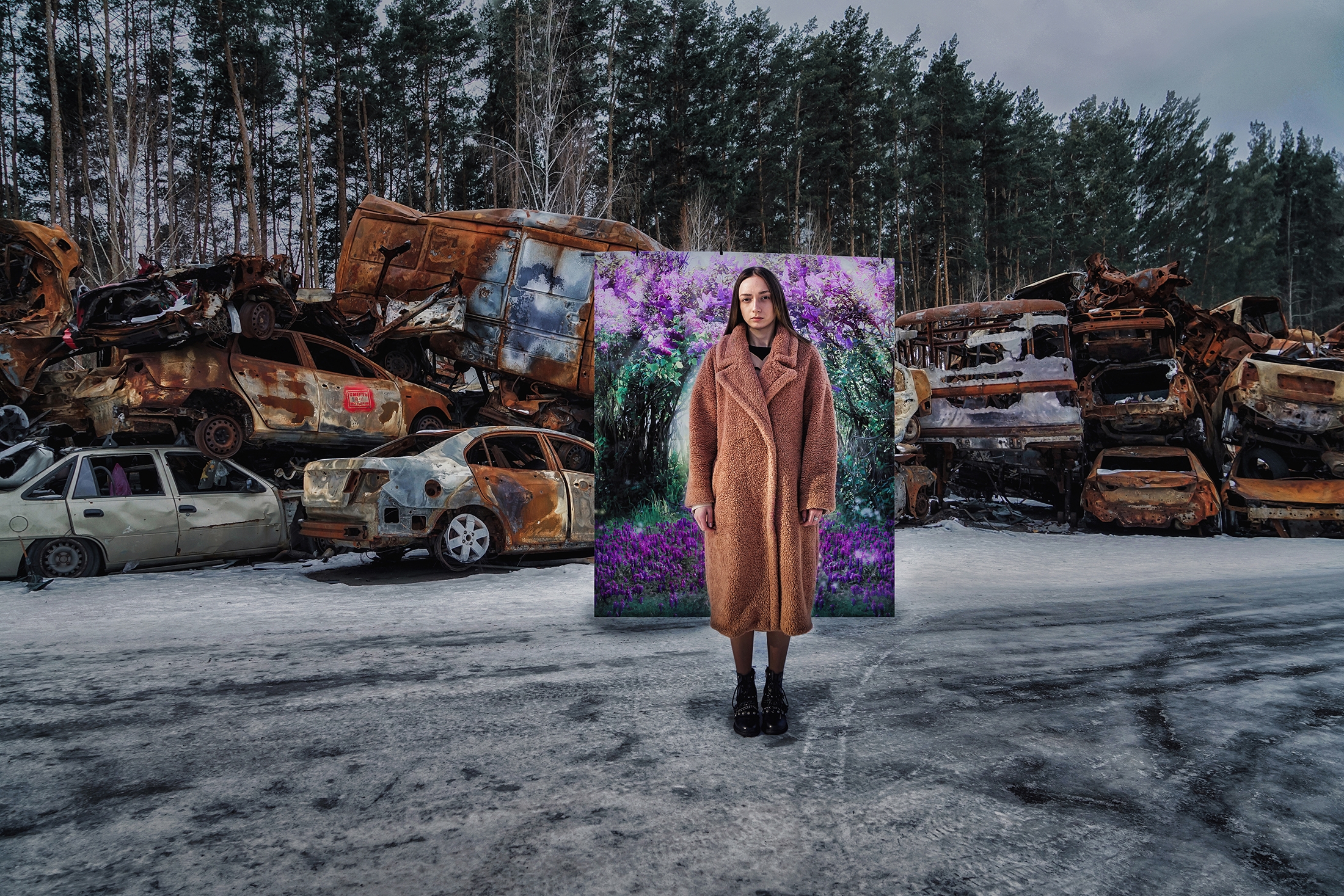
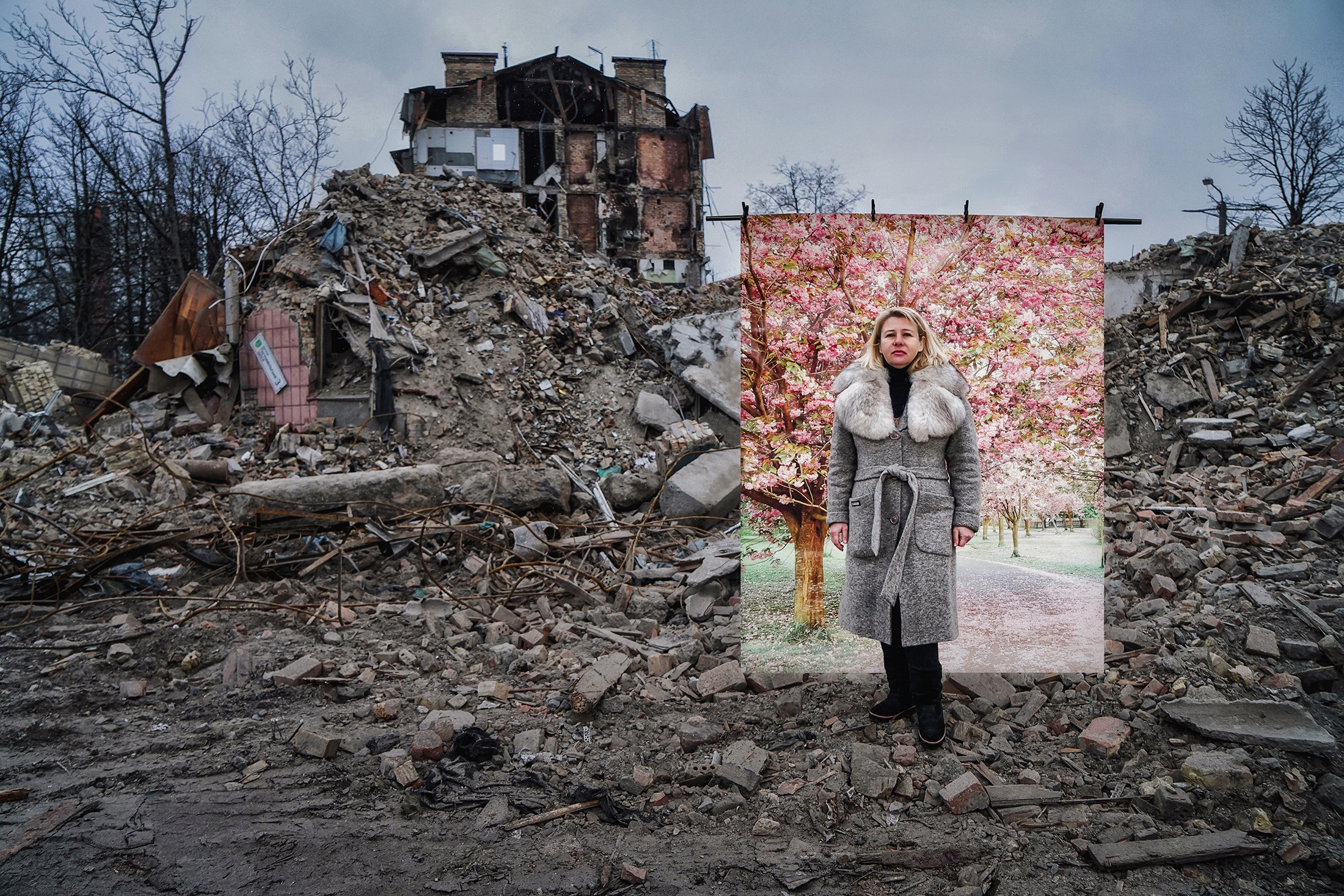
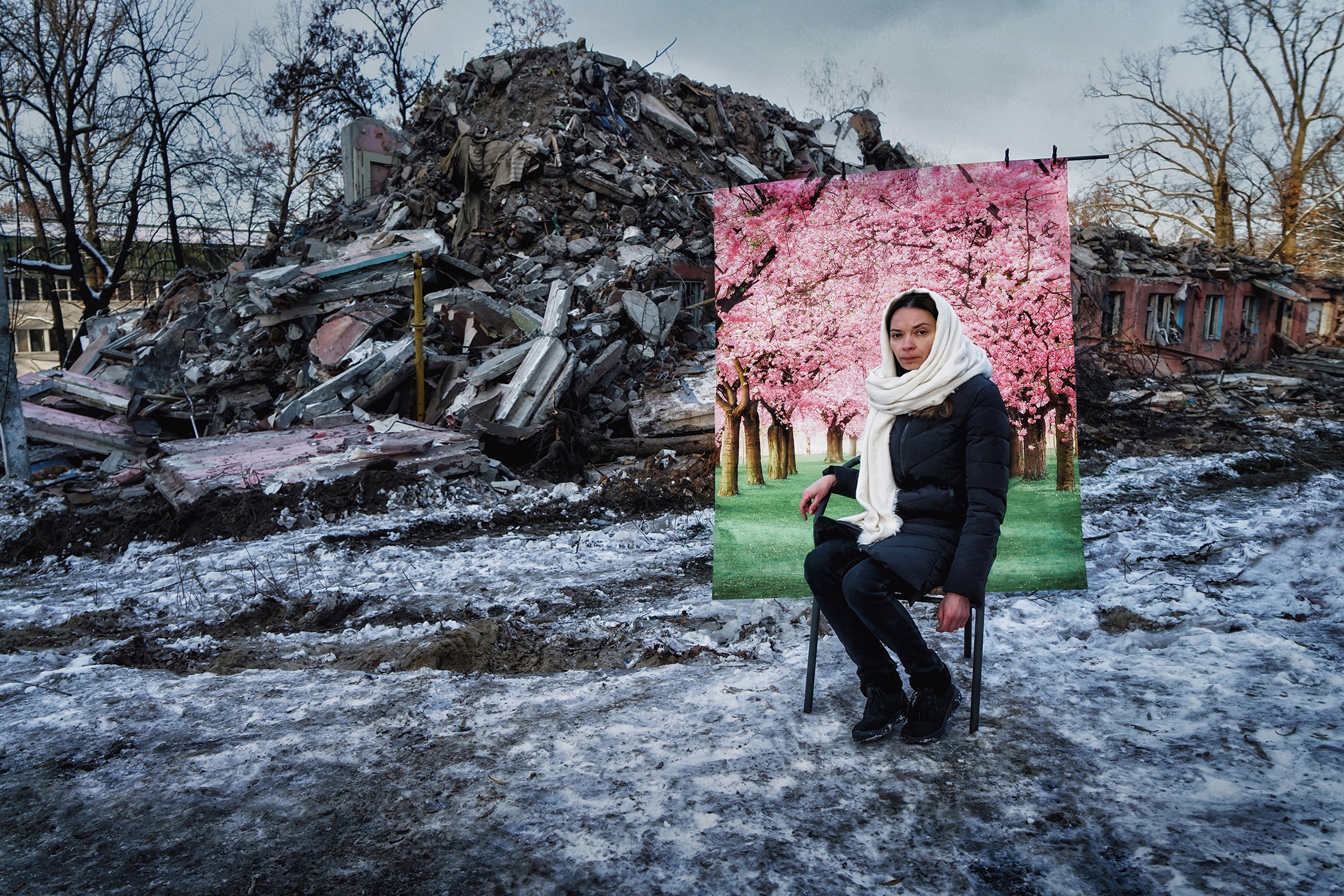
Her series Stolen Spring, which won her the title of TIFA Photographer of the Year 2025 along with double gold in the People/Portrait and Portfolio/Fine Art categories, documents women who have endured the violence and misery of occupation. But these aren’t the standard images of war photography.
Grom stages her subjects amid the ruins with a formal precision that transforms documentary into something more complex; portraits that sit somewhere between evidence and art.
Historic influences
This distinctive approach comes from an unexpected source: Polish photographer Michael Nash’s images of Warsaw’s ruins during the Second World War. Grom found resonance in how Nash captured destruction not as spectacle but as a backdrop for a spirit of human persistence.
Grom’s 21st-century women, in turn, stand in front of bombed-out buildings, surrounded by rubble and twisted metal, dressed in ways that assert a sense of normality against surroundings that deny it. The spring of the title refers to the season that passed unnoticed during occupation; time stolen along with homes, loved ones and portions of lives that can never be recovered.
What makes this all particularly pointed is Grom’s own displacement. Born in Donetsk, she was forced to leave in April 2014 when conflict erupted in Eastern Ukraine.
She settled in Bucha near Kyiv in 2017. When Russia launched its full-scale invasion in 2022, she became a refugee for the second time. After Bucha was retaken from the Russians, she returned to find her neighborhood transformed into the kind of wasteland she’d already fled once before.
This double displacement informs every frame. Grom’s lens captures internally displaced persons from Donbass and Crimea who are experiencing their second tragic spring; people who, like her, have watched their lives destroyed twice.
Importantly, her portraits acknowledge this layered trauma without wallowing in it. Her subjects meet the camera with expressions that resist easy categorization: not quite defiant, not quite defeated. Having visited Ukraine myself since the full-scale invasion, I’d say this feels highly representative of the population at large.
It’s also important that, by staging these portraits rather than catching spontaneous moments, Grom is giving her subjects agency. They’re not victims caught unaware by a roving lens, but participants in creating an image that will represent their experience.
The careful compositions – often centered, symmetrical, with the subject placed deliberately within the destruction – contributes to a careful balance between tragedy and hope.
Art or documentary?
For some, Grom’s methodology might seem too controlled, too constructed to qualify as documentary. But I’d argue this is actually a fair reflection of her subjects’ new reality. Because in truth, everything about life after occupation is staged.
The attempt to maintain routine in rubble-strewn neighborhoods; the performance of normalcy amid ongoing trauma; the constant internal battles between what was and what is…
Overall, Stolen Spring achieves something documentary photography often struggles with: the representation of ongoing trauma without reducing subjects to their suffering. That’s not an easy trick to pull off, but it helps that Grom is not an outsider documenting someone else’s tragedy. She’s photographing her neighbors, people whose displacement mirrors her own.
In a press release, TIFA’s program director Hannah Lillethun notes that this year’s winning images “show the power of photography to tell stories that transcend boundaries”.
But to my eyes, Stolen Spring does something more specific than that. These pictures portray what happens when the photographer cannot transcend boundaries…. because she’s trapped within them.
Author: Tom May
Source: DigitalCameraWorld
Reviewed By: Editorial Team