

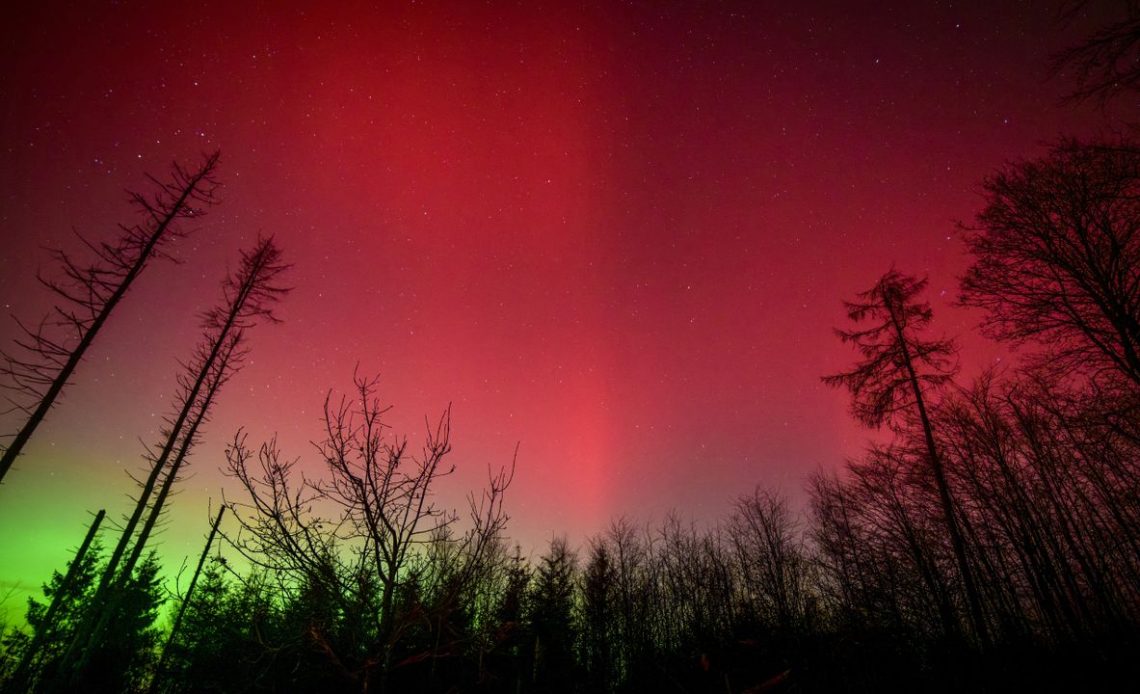
A major solar storm brought aurora sightings as far south as Colorado and Connecticut in the US Monday night, alongside sightings in Europe as far south as Germany and France. But, if you missed the display, the National Oceanic and Atmospheric Administration scales indicate the solar storm’s effects could linger into Tuesday night.
NOAA data indicates solar activity reached a KP8, G4 solar storm overnight between January 19 and the early hours of January 20. That’s due to a solar storm that NOAA indicated was the “largest solar radiation storm in over 20 years.”
While the NOAA data suggests the peak of the solar storm has already passed, the organization suggests that its effects could continue into Tuesday night, bringing a potential encore to those at higher latitudes.
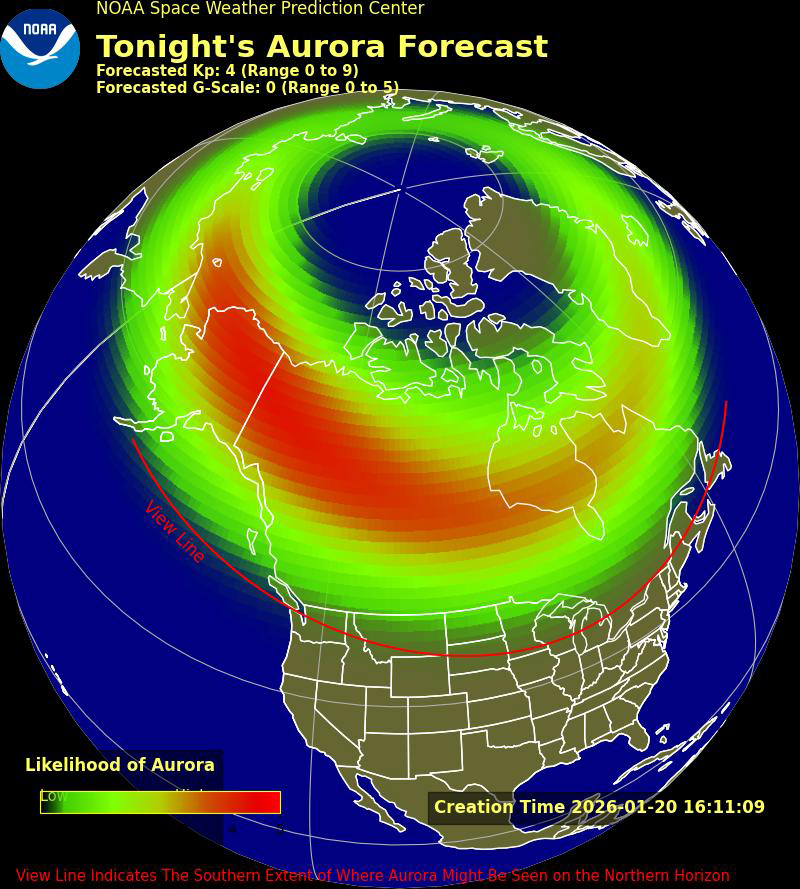
Tuesday night’s forecast doesn’t reach as far south as the Monday night storm, with predictions for a potential KP 4, G1 storm. The forecast for Tuesday night hints that the aurora could be visible in northern latitudes. In the US, potential NOAA data indicates potential sightings in Maine, Michigan, Wisconsin, Minnesota, North and South Dakota, Montana, Idaho, and Washington. Meanwhile, Alaska and parts of Canada have an even higher probability of an Aurora encore on Tuesday night.
Similarly, the UK’s MET Office indicates that the geomagnetic storm is waning, but that parts of Scotland and Northern Ireland could get another display on Tuesday night.
NOAA data indicates that Tuesday’s forecast is lower than the storm that created confirmed sightings as far south as Colorado. But, if you missed the Monday night show due to cloud cover, there’s potential for another spotting in northern regions tonight.
The 30-minute aurora forecast tends to be more accurate than NOAA’s three-day forecast, so aurora chasers may want to check the short-term forecast before heading out.
Cloud cover could dampen aurora chasers’ efforts, as clear skies to the north are needed to spot the aurora from the ground. Full darkness is also needed to spot the Aurora, so winter’s shorter days may help.
Remember, cameras can often see the Northern Lights before the naked eye can. My go-to aurora settings are to put my mirrorless camera on a tripod and start at a 20-second shutter speed, adjusting from there as needed, as a bright aurora can handle much faster shutter speeds.
For more tricks on photographing the northern lights, view our how-to guides on photographing the northern lights with a camera or a smartphone camera.
Author: Hillary K. Grigonis
Source: DigitalCameraWorld
Reviewed By: Editorial Team